Discover the Garnier Mill
A Mill in Two Parts
An ideal setting
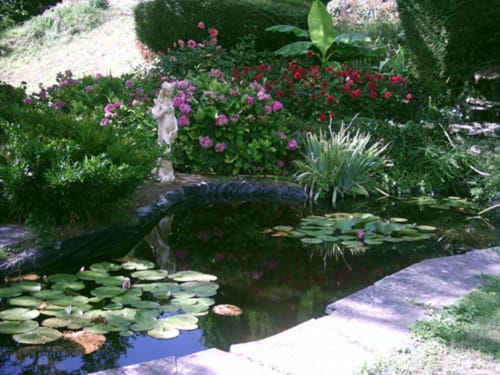
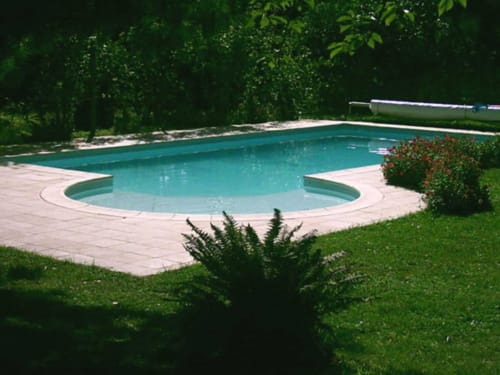
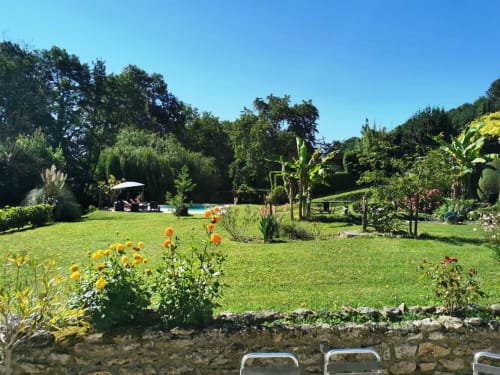
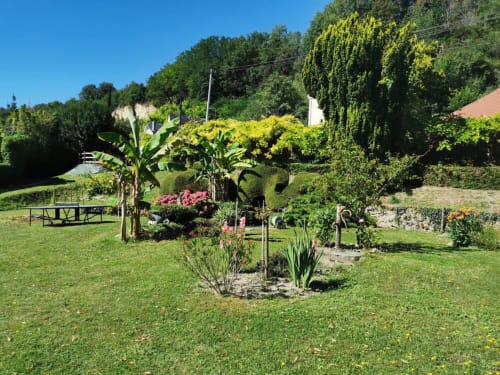
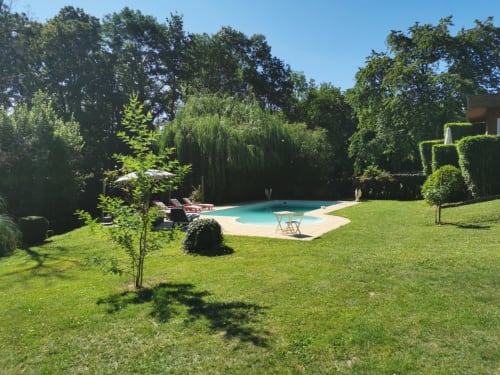
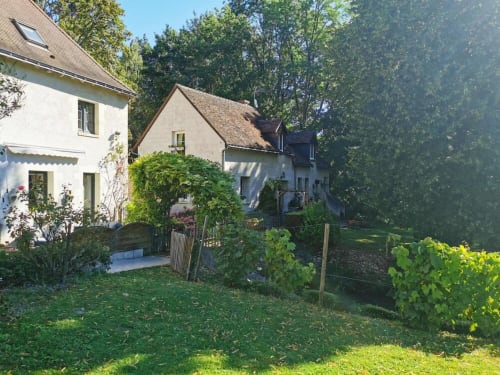
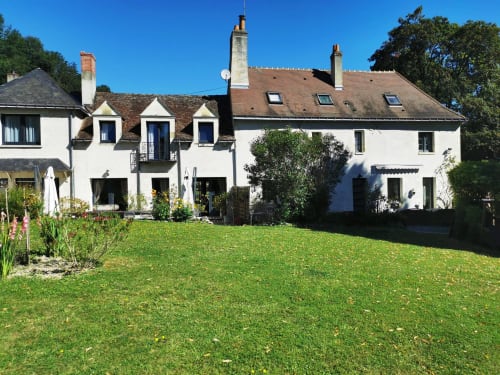
The mills are nestled in the middle of a one-hectare wooded park, which is ablaze with flowers during the warmer months, where you can relax, read, take a nap, or swim in the large pool, which is equipped with an alarm to keep children safe.
❀❀❀
Activities at the Mill
A Little History
I conducted an investigation to uncover the secrets of the Moulin de Garnier, also known as Griard. I invite you to join me in discovering its history and mysteries.
Your host, Olivier
History of the Mill
I haven't found any mention of the Griard mill before 1754, but it may have been built in the early 18th century. I don’t know why it was deemed necessary to build another mill so close to the Garnier Mill and the Landes Mill. At that time, one was a grain mill and the other a fulling mill.
On December 31, 1754, the Griard Mill was sold to René Ferron, a tenant farmer of the Barony of Vernou. It was a fulling mill. The sellers were René Gaudin, a mason in Saumur (currently residing in Tours at the Hôtel des Trois Ecus); Joachim Gaudin, a mason residing in Saumur; and Françoise Gaudin, a servant in Tours—all three children and sole heirs of Jean Gaudin, a fulling miller, and Jeanne Breussin; The mill is described as follows on that date: The house and mill for fulling cloth, known as the Moulin Griard, on the “Branne” River flowing down to the Pont de Cosson, bordering the Brenne River to the west and the Communs (communal meadows) of Vernou to the east, and to the north by Blaise Deshayes, tenant farmer of the Garnier mill.
The aforementioned Moulin Griard, belonging to the fief and barony of Vernou, is subject to the ancient and customary rents and dues, as well as a rent of 4 livres payable to the parish council or parish priest of the Saint-Étienne parish in Tours.
On September 29, 1757, René Ferron leased the Griard Mill to Blaise Deshayes. The Garnier Mill and the Griard Mill are linked, and the same miller operates both.
On November 6, 1764, a dispute arose between René Ferron, a merchant and miller from Vernou, and Marguerite Besnier, the widow of Blaise Deshayes the Elder, a fulling miller, and her son Blaise Deshayes: The issue concerned unpaid rent arrears and, furthermore, “a ditch or so-called spillway” that diverted the flow of the Defaix River, which fed the aforementioned Griard Mill, thereby preventing the mill from turning...
The lawsuit had progressed quite far, as it states: “to settle the pending proceedings between them, both in the Grand Chamber and at the General Seat of the Table de Marbre in Paris,” Mr. Ferron, as assignee of Messrs. Damont and others?, is authorized to regain possession, ownership, and use of the Griard fulling mill and its outbuildings, due to the failure of the widow Deshayes to pay the rent arrears owed to him.”
An appraisal was conducted by the experts: “in a tile-roofed building consisting of a large room with a fireplace, Inside is a storeroom, followed by another room containing the ‘astellier’ and the fulling mill, equipped with its fulling mill, mallets, shaft, roux, and other implements of said mill; above the main rooms are two high-ceilinged rooms and a study, a large attic spanning the entire structure, and a wooden staircase whose base is ‘inside’ the first lower room.”
(I believe this description better matches the mill currently known as Garnier.) Another main building constructed by the Deshayes community, consisting of a ground-floor room with a fireplace, a stable, and an attic above it all.
A large garden to the south, surrounded by old walls and the Defaix River. In 1792, Michel Dubreuil, husband of Marguerite Ferron, was the owner. The Griard mill, so close to the Garnier mill, ceased operations around 1810, when it was converted into a storage shed for the Garnier mill (or vice versa...).
In 1820, Jean Fouassier became the owner. Reading through all these deeds concerning the mills of the Brenne in the village of Vernou, one realizes that they have always been located there, at least since the Middle Ages, and to summarize: the hamois polishing mill, the widow Chartier’s fulling mill, the Landes mill, and at the same location another old wheat mill, the Garnier mill, and the Griard mill—this explains why there are so many branches of the Brenne, each bearing a different name. (Don’t forget the communal mill on the Brenne as well): the Brenne, the Bransle, the Defaix River, and the Boisseau River.
Based on the above texts concerning the Garnier and Griard mills, and according to the maps from 1783 and 1817, it appears that the main mill is the Griard Mill and the smaller one next to it is the Garnier Mill—not the other way around. Only the name “Garnier” has remained associated with the site.
In 1971, the Garnier and Griard mills were purchased by Mr. and Mrs. Guégnaud and then gradually renovated on the inside.
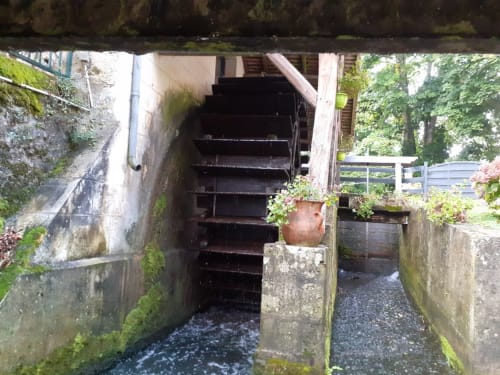
In 1992, my parents decided to open a bed-and-breakfast, so I took over in 2001 and continued running it. Then, in 2009, I restored the mill wheel to restore its former charm.
The Renovation of the Garnier Mill
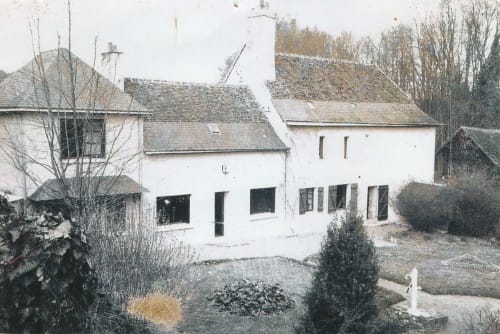
The Garnier Mill in 1971
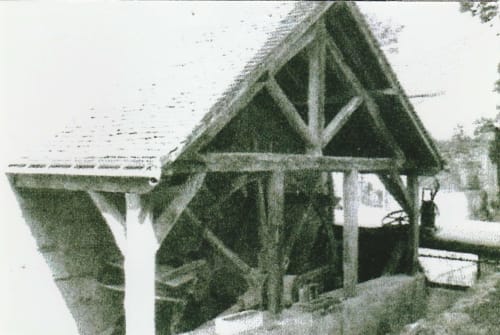
Condition of the wheel at the Garnier Mill in 1971
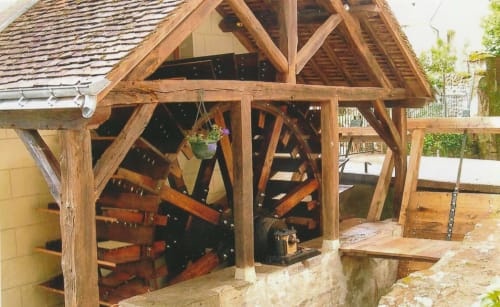
Wheel of the Garnier Mill, restored in 2008